Walk onto any ward, aged care center, or GP facility and you will certainly see the exact same peaceful truth: medical care support staff are anywhere, and they are usually closest to the person when something goes wrong. Yet they are also individuals who most often struggle to find time for full‑day CPR and first aid training.
Express CPR courses and fast first aid training are an effort to address that tension. Succeeded, they give healthcare support staff the skills and self-confidence to react in the very first vital mins, without tearing a lineup apart or dragging people off the floor for an entire day. Done severely, they become a tick‑the‑box workout where people collect a first aid certificate however still freeze when an individual stops breathing.
The difference comes down to design, shipment, and expectations.
I have actually spent years running first aid and CPR courses, including express first aid and express cpr training for health centers, handicap solutions, and aged care homes. What complies with is drawn from that experience: what jobs, where express layouts go wrong, and how managers and staff can obtain real worth from fast cpr and fast first aid courses.
The reality for healthcare assistance staff
Most healthcare assistance personnel are working in environments where damage is common and sudden acceleration is constantly feasible. Think of:

Porters transferring a patient from healing who notifications the oxygen saturation dropping on the monitor.
A treatment assistant in an aged treatment dining-room viewing a resident clutch their upper body and slide from the chair. A disability assistance employee alone in a community setting when a customer with epilepsy collapses and stops breathing.Nurses and physicians may neighbor, however in those very first 30 to 90 seconds, the person standing closest to the client is usually a support worker, medical care aide, PCA, AIN, or organized. That person ends up being the very first -responder by default.
The obstacle is that lineups are limited. Lots of solutions run lean staffing versions. Pulling somebody off the flooring for a full‑day first aid course or long first aid and cpr training classes can suggest closing beds, paying added overtime, or forcing associates to soak up hazardous workloads.
That is where fast first aid training and express cpr courses find their niche. They guarantee the essentials in a much shorter home window, often arranged around changes, handovers, or quieter medical times.
The essential concern is not whether express courses are shorter. The inquiry is whether they are focused sufficient to keep staff qualified, secure, and compliant.
What "express CPR" actually means
There is no universal meaning of an express cpr course. Some companies make use of the label for any kind of cpr training much shorter than 3 hours. Others make use of mixed versions where the theory element is finished online and the useful skills are done face‑to‑face in a really concentrated workshop.
In practice, a lot of express cpr training for health care support team adheres to among 3 patterns:
A fully face‑to‑face quick session, greatly skills‑based, usually 60 to 90 minutes. A mixed style with online theory in the team member's very own time, adhered to by a 60 to 90 minute sensible evaluation. A pressed incorporated first aid and cpr course that concentrates on life‑threatening emergency situations only, typically marketed as a fast first aid course or express first aid course.The express label needs to never ever mean "much less rigorous". It must mean "much more streamlined". Good express first aid training strips out the common web content that clinical staff do not require, such as prolonged conversations on small cuts or insect attacks, and spends that time piercing the skills that truly maintain people alive.
When I design an express cpr course for a health center or aged care facility, I begin with three concerns:
What precisely are support personnel most likely to deal with here?
Just how fast can medical back-up realistically arrive? What does the regulation, the work environment plan, and the certification body require?Only after that do we discuss duration, layout, or certification.
Core abilities that can not be rushed
Shorter courses are only acceptable if every individual still shows competency in the skills that matter. For medical care support personnel, express cpr and first aid and cpr courses must constantly cover, first aid Adelaide practise, and examine a core collection of capabilities.
Recognition of cardiac arrest and life‑threatening deterioration
Assistance team need to be able to tell the difference between a sluggish person and somebody that is unresponsive, not taking a breath normally, or in respiratory apprehension. In a fast first aid course there is no room for obscure theory. They have to practise checking responsiveness, opening up the airway, and quickly analyzing breathing. We additionally interactive first aid training classes hang out on agonal gasps, which several inexperienced personnel interpret as "breathing" when they are in fact an indication of heart arrest.Effective chest compressions
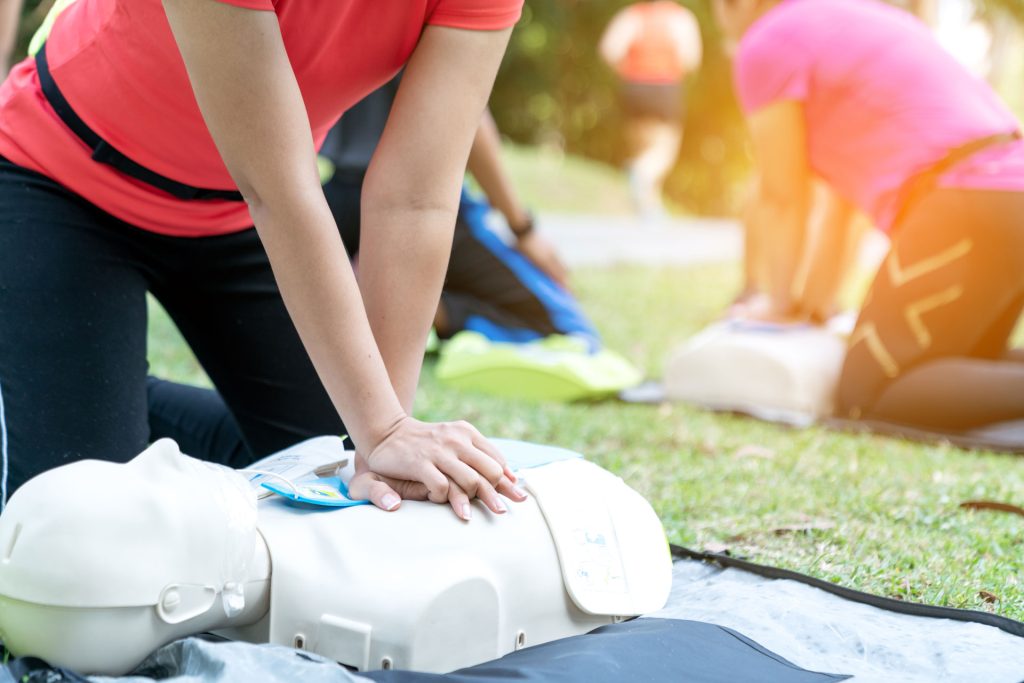
Compressions are where I see the largest void between concept and reality. Individuals often come into cpr courses saying they have actually done e‑learning or seen office videos. Then they put their hands on the manikin and their compressions are as well superficial, as well slow-moving, or all in their arms rather than using their body weight.In express cpr training I demand several brief, intense rounds of compressions as opposed to one long go. Personnel feel what 30 correct compressions do to their shoulders and exactly how quickly exhaustion damages their technique. We after that speak about turning rescuers and how to handle that in an actual ward or aged care corridor.
Use of AEDs in actual professional environments
A lot of medical care facilities have defibrillators on the wall surface, yet several support team are unsure whether they are "permitted" to utilize them. Fast cpr courses have to cut through that reluctance. Personnel handle the AED instructors, open them, attach pads, and adhere to the prompts while compressions proceed. In a health center or facility, that likewise means talking about what to do with oxygen lines, steel bed rails, and messy bed spaces.Team functions and communication
Support team rarely work alone. A good express first aid and cpr course makes use of situations that simulate the real group dynamics: that calls the code, who does compressions, that gets rid of the bed, who runs for the crash cart. We practice short verbal loopholes: "You call the code. I will begin compressions. Please bring the AED." That sounds easy, but in an actual arrest, people return to their training or their panic. You select which by the way you train.Legal and organisational frameworks
Also in a pressed layout, we need a brief, clear explanation of extent. Assistance personnel must leave understanding what their organisation anticipates of them, exactly how their first aid certificate suits that, and why beginning fundamental life support is not "violating" but a core part of patient safety.Where first aid fits into express CPR formats
Many healthcare services prefer an integrated first aid and cpr course so they can restore CPR and more comprehensive first aid proficiencies in one block. When the schedule is tight, they usually ask for a fast first aid course or express first aid that focuses on high‑risk events.
For support staff in professional setups, the most pertinent first aid subjects often tend to be:
Cardiac apprehension and choking
Breast pain and believed heart attack Extreme allergies and anaphylaxis Seizures, particularly in handicap and psychological health and wellness services Significant blood loss and fundamental wound controlExpress first aid courses for medical care employees seldom need prolonged areas on household risks, work environment small injuries, or outside situations. The compressed time is better spent running short, realistic simulations in healthcare facility rooms, household eating locations, or client transfer bays.
Where express childcare first aid training is required, such as in paediatric wards or youngsters's solutions within a health center, the focus shifts a little. Personnel needs to understand baby and child CPR ratios, paediatric choking monitoring, and the details patterns of wear and tear in youngsters, which can be fast and dramatic after an evidently stable period. Lots of organisations choose an express childcare first aid course to freshen these abilities annually, incorporated with broader paediatric education supplied internally.
Designing express training around actual roles
One of the weak points of common first aid courses is that they picture a single "rescuer" taking care of everything from roadside collisions to workplace paper cuts. Healthcare support personnel operate in an extremely various setting. They become part of medical groups, in structures filled with specialized tools and strict policies.
The ideal express cpr courses identify that and are customized to the particular workplace:
Hospital porters and orderlies
They are frequently moving patients, typically alone in lifts or lengthy corridors. Training must include scenarios where an individual wears away mid‑transfer, with restricted room and no instant accessibility to a complete team. Practising cpr on a trolley in a narrow area modifications every little thing about body positioning and tools access.Aged treatment assistants
Homeowners can arrest in bed, in a recliner chair, or in a communal area. Express first aid courses in this atmosphere ought to include rearranging a sickly individual safely, taking care of family members that may be present and troubled, and making use of AEDs around mobility aids and oxygen equipment.Disability support workers

GP and medical care support staff
Assistants, medical aides, and technique nurses can all be the first to discover a client slumping in the waiting area. Express first aid and cpr courses must stroll directly with that circumstance, including group management, personal privacy factors to consider, and handover to ambulance crews.When a company just supplies a generic fast first aid course near me without changing for these truths, team feel the mismatch. They attend, pass, and leave still unsure just how they would certainly cope in the settings they actually face.
Express childcare first aid in professional and neighborhood settings
Express child care first aid courses commonly bring in personnel from combined backgrounds: paediatric nurses, childcare teachers affixed to healthcare facilities, allied wellness assistants, and very early intervention employees. The typical thread is obligation for infants and youngsters, typically in high‑risk populations.
Compared with adult‑only express first aid, a good express child care first aid course spends even more time on:
Airway positioning and breathing assessment in infants
Parents and even skilled adult‑care staff are frequently reluctant to turn an infant's head enough to open up the air passage, or they misjudge normal baby breathing prices. Practice with baby manikins is crucial, and can not be replaced by theory alone.Infant and child CPR mechanics
The distinction in between two‑finger compressions on an infant and one or two‑handed compressions on a child should be seasoned literally. In an express layout, short, duplicated collections are much better than prolonged single attempts. We focus on getting the deepness and rate right, not simply enduring a timed test.Choking in toddlers and infants
This is among one of the most typical and most frightening emergencies in child care. Express childcare first aid training ought to make use of age‑appropriate manikins and practical food things, and need to stress positioning, back blows, breast thrusts for babies, and stomach thrusts for older kids with up‑to‑date guidance.Paediatric anaphylaxis
Several paediatric and child care solutions have numerous adrenaline auto‑injector brands on website. Express childcare first aid courses should allow personnel to deal with instructor devices, practice the management steps, and rehearse interaction with parents and rescue services.When combined into a more comprehensive express cpr course or fast first aid training schedule, these components can maintain paediatric understanding fresh without needing whole‑day childcare‑specific workshops every year.
Making express training job within change patterns
The logistics of express cpr training in medical care settings can be more complicated than the material. I have actually seen well‑intentioned programs crumble due to the fact that no one mapped training times against staffing realities.
For 24‑hour services, the most convenient designs generally involve among the following:
Short sessions beginning early, capturing night shift prior to they go home and day shift as they arrive.
Mid‑shift blocks for areas with predictable quieter home windows, such as mid‑afternoon in some outpatient clinics. Multiple repeats of the exact same 60 to 90 minute express first aid course in a single day, so little groups can cycle with without leaving divisions understaffed.The excellent benefit of fast certification models, particularly blended knowing, is flexibility. Team full first aid and cpr concept online in their very own time within a set window, then participate in concentrated express first aid training for abilities analysis. For workplaces, that usually means much less interruption and much less disappointment attempting to squeeze lengthy talks about patient peaks.
One care, though: on-line components do not automatically equivalent discovering. Managers must inspect conclusion reports and, where possible, ask companies if the e‑learning consists of scenario‑based concerns instead of easy click‑through slides.
What to try to find in an express CPR or fast first aid course
Because "express" is not a protected term, you will certainly discover huge variant in quality. When picking a supplier for medical care assistance team, it assists to ask a few pointed questions.
Here is a compact choice checklist you can make use of when contrasting express cpr courses and fast first aid courses for your work environment:
Is the course across the country identified or straightened with pertinent clinical standards, and will staff get a legitimate first aid certificate or CPR statement of attainment? Does the provider consistently educate health care or aged treatment staff, and can they customize circumstances to health center, disability, or child care atmospheres? Is there a combined knowing alternative that uses significant on-line components, not simply static PDFs, so that face‑to‑face time is freed for extensive skills practice? How numerous individuals per fitness instructor, and the number of manikins per team, to make certain every person practices sufficient compressions, AED usage, and circumstance work? Is there a clear prepare for refresher cycles, including express cpr correspondence course options, so that annual or semiannual renewals are workable for rosters?If a carrier can not address these plainly, or attempts to offer a common public "fast first aid course near me" without recognizing the specifics of your setup, maintain looking.
Addressing typical problems and misconceptions
Both team and managers typically have appointments regarding fast first aid and express cpr training. A few of them are justified, others are based on outdated experiences.
"Express implies watered‑down"
This is just real if the provider makes use of express as an advertising term without revamping the course structure. A well‑built express first aid course trims rep and non‑essential topics while preserving (or even improving) hands‑on technique for the core abilities. As a matter of fact, I often see far better compression method from team that have just ended up a focused 75‑minute express cpr course than from those that sat through a long, theory‑heavy day."We can not spare team from the floor, also for 60 mins"
In high‑acuity locations with persistent staffing stress, this feels shateringly real. Yet the danger of having a mainly untrained assistance labor force is not academic. Coronial records on a regular basis note hold-ups in fundamental life assistance since "personnel were unsure of their duty" or "no‑one started breast compressions till clinical team got here". In my experience, when managers map out numerous small sessions of fast first aid training over a few weeks, the short‑term discomfort is convenient and the payoff in self-confidence is significant."Assistance personnel will never really do CPR, that is the registered nurse's job"
Walk through any kind of genuine arrest scenario and you will see this is false. By the time a registered nurse or medical professional gets here, valuable seconds have actually already passed. An assistant who can examine responsiveness, call for assistance, and begin compressions purchases important time. Even if clinical personnel take over promptly, that very first action frequently makes the distinction in between a survivable downtime and an unsurvivable one."Online CPR training suffices for assistance personnel"
Theory‑only cpr training is never ever enough. Fast certification models that miss face‑to‑face evaluation provide a harmful illusion of capability. Compressions, especially, are a physical ability. Without comments on deepness, price, and recoil, many people undervalue just how much effort is required. If a provider supplies a simply on-line express cpr course for healthcare settings, I strongly discourage it.Making express training stick after the course
Even the very best express first aid courses are just pictures. Abilities start to fade within months if they are never made use of or reviewed. That is particularly real for assistance staff that may rarely see complete apprehensions, yet often see very early indication of deterioration.
There are a few straightforward, low‑cost means to reinforce learning between formal fast cpr or first aid and cpr course renewals.
First, integrate micro‑drills into regular personnel meetings or handovers. Two or 3 minutes evaluating the DRSABCD activity plan, practicing chest compressions on a manikin in the ward storage place, or going through the area of the local AED keeps paths fresh.
Second, utilize brief debriefs after real incidents. When an emergency situation takes place, include support team in the evaluation. What functioned, what felt complicated, exactly how did the emergency situation call process go, where was the AED, that started compressions? These discussions are powerful, especially when paired with positive acknowledgment of team that acted quickly.
Third, set brand-new team with skilled associates throughout sensible parts of express cpr training. "Pal" versions are particularly reliable for support employees new to medical care. Hearing just how an elderly associate handled their very first real‑life arrest frequently bridges the void between concept and practice.
Finally, timetable express cpr refresher courses proactively, not reactively. If you wait up until certificates are about to end and then try to pack training right into a solitary week, rosters suffer and corners are more probable to be reduced. A rolling calendar of fast cpr correspondence course sessions throughout the year spreads the load.
Balancing compliance, reality, and client safety
Every health care manager I understand lives in a tug‑of‑war in between necessary training targets and daily professional pressures. Express first aid courses and express cpr training can seem like yet another conformity box, or they can come to be a practical security device that staff actually value.
The distinction hinges on some regular concepts:
Be sincere concerning the professional threats sustain team face. If they are alone with people, they require greater than a theoretical understanding of very first aid.
Choose course structures that value shift work and exhaustion, instead of including long class days in addition to hefty rosters. Insist on genuine functional analysis, also basically formats. A first aid certificate must reflect actual capacity, not just attendance. Incorporate express first aid and cpr courses into a more comprehensive society of emergency readiness, rather than treating them as separated events.When express cpr courses are selected and executed with that way of thinking, healthcare assistance personnel quit seeing them as a problem. They begin to see them as a possibility to acquire control over a few of the scariest moments in their functioning lives.
And on the day when an individual, homeowner, or customer suddenly stops breathing at the precise moment a registered nurse is down the hall and the physician gets on an additional floor, the individual who reaches them initially will certainly already understand what to do. That is the true examination of any kind of fast first aid course or express cpr training program: not exactly how brief it is, not how many certifications are printed, but how smoothly and effectively an assistance worker's hands move in those very first secs when every heartbeat matters.